
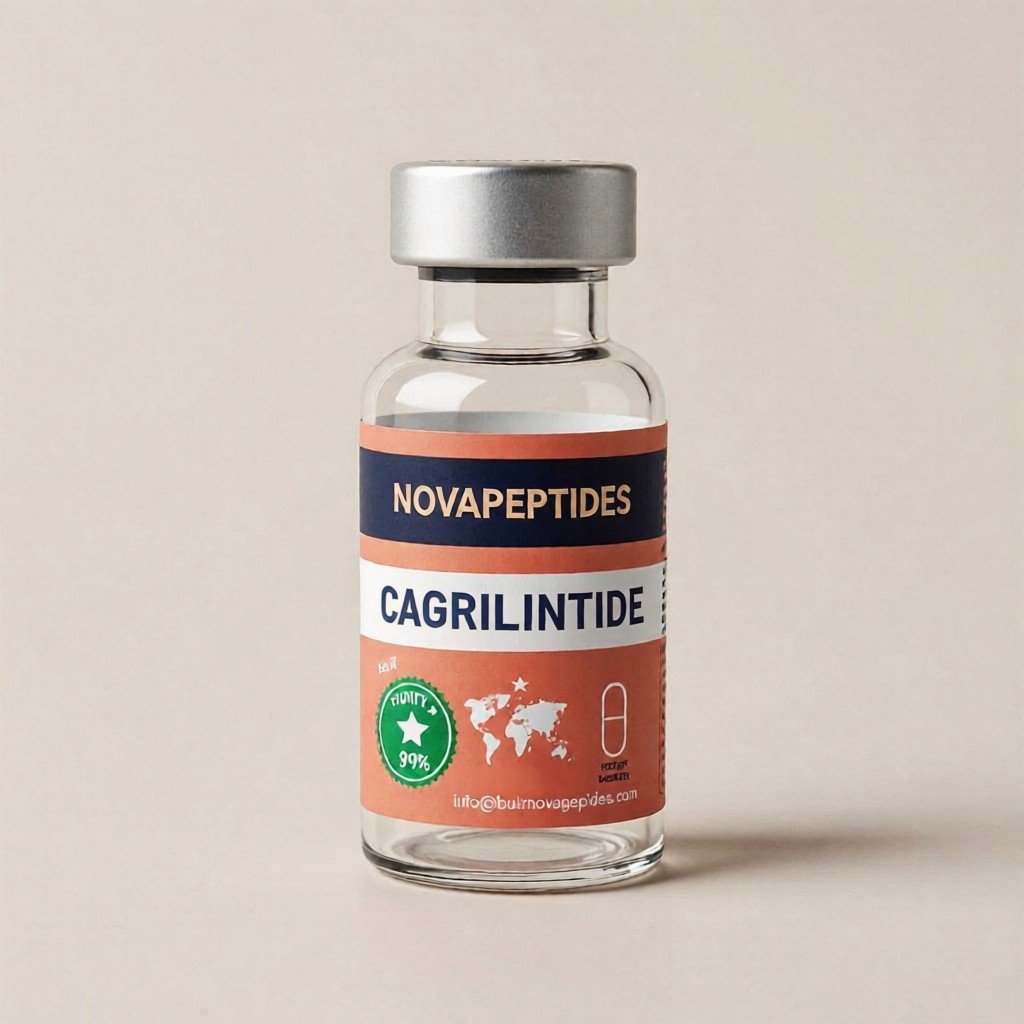
Cagrilintide: The Long-Acting Amylin Analog Revolutionizing Obesity Treatment

Price range: $114.00 through $193.00
Cagrilintide is a groundbreaking long-acting amylin analog peptide developed by Novo Nordisk for advanced weight management research. As a dual amylin and calcitonin receptor agonist, cagrilintide represents a novel mechanistic approach distinct from GLP-1 therapies. Clinical data from the Phase 3 REDEFINE program demonstrates unprecedented efficacy, with the cagrilintide-semaglutide combination (CagriSema) achieving 20-22.7% mean body weight reduction over 68 weeks. This investigational peptide targets AMY1, AMY2, and AMY3 receptors to regulate appetite, satiety, and energy balance through central and peripheral pathways.
Cagrilintide: A Comprehensive Scientific Profile of the Novel Amylin Analog
Cagrilintide represents a significant advancement in peptide therapeutics for metabolic disease research. This long-acting amylin analog, developed through sophisticated medicinal chemistry by Novo Nordisk, offers a distinct mechanistic approach to weight management that complements existing GLP-1 receptor agonist therapies. As research into dual-hormone combination therapies accelerates, cagrilintide has emerged as one of the most promising investigational peptides in the obesity treatment landscape.
Pharmacological Classification and Mechanism of Action
Cagrilintide functions as a non-selective dual agonist at both amylin receptors (AMYRs) and calcitonin receptors (CTRs). Unlike native human amylin, which has a short plasma half-life of approximately 13 minutes, this engineered peptide features strategic modifications that extend its duration of action to support once-weekly administration.
The pharmacodynamic profile of cagrilintide involves activation of three distinct amylin receptor subtypes:
- AMY1 Receptors: Heterodimers of calcitonin receptor (CTR) and receptor activity-modifying protein 1 (RAMP1)
- AMY2 Receptors: CTR-RAMP2 complexes with distinct signaling properties
- AMY3 Receptors: CTR-RAMP3 configurations prevalent in hypothalamic feeding centers
According to structural studies published in Nature Communications, cryo-electron microscopy has revealed how cagrilintide engages these receptors in active, Gs-coupled conformations, providing molecular insights into its prolonged receptor activation and sustained pharmacological effects.
Clinical Development and REDEFINE Trial Results
The clinical evidence supporting cagrilintide comes from the comprehensive REDEFINE Phase 3 program, which represents the largest investigation of amylin-based therapy for obesity to date. These multicenter, randomized, double-blind trials have generated remarkable efficacy data that positions cagrilintide as a potential next-generation therapeutic option.
Key findings from REDEFINE 1 (published in the New England Journal of Medicine) demonstrate:
- CagriSema (cagrilintide 2.4 mg + semaglutide 2.4 mg): 22.7% mean weight reduction at 68 weeks
- Cagrilintide 2.4 mg monotherapy: 11.5% mean weight reduction
- Semaglutide 2.4 mg alone: 14.9% mean weight reduction
- Placebo: 3.0% weight reduction
The REDEFINE 2 trial specifically evaluated adults with overweight or obesity and type 2 diabetes, confirming robust efficacy across metabolic subpopulations. These results establish cagrilintide as the first amylin analog to demonstrate Phase 3 clinical success as both monotherapy and in combination with GLP-1 receptor agonists.
Molecular Structure and Engineering
The development of cagrilintide represents a triumph of peptide medicinal chemistry. Published research in the Journal of Medicinal Chemistry details the structure-activity relationships that guided its optimization.
Key structural features include:
- Acylation: A C20 fatty diacid attached via a γ-Glu-2xOEG linker to Lys¹ enables albumin binding and extended half-life
- Sequence Modifications: Strategic substitutions at positions 25, 28, and 29 enhance proteolytic stability
- Formulation: Optimized for subcutaneous injection at low pH (pH ~4) to ensure solubility and stability
These modifications transform the pharmacokinetic profile from the minutes-long duration of native amylin to a week-long activity window suitable for convenient patient administration.
Physiological Effects and Therapeutic Applications
Cagrilintide exerts its effects through multiple complementary mechanisms that distinguish it from other weight management approaches:
Central Nervous System Actions: The peptide crosses the blood-brain barrier to activate amylin receptors in the area postrema and hypothalamus, reducing appetite signals and enhancing satiety perception. Research published in PubMed confirms that cagrilintide lowers body weight specifically through brain amylin receptor signaling pathways.
Gastric Effects: Amylin receptor activation slows gastric emptying, contributing to prolonged fullness and reduced meal frequency.
Metabolic Actions: Beyond weight effects, cagrilintide demonstrates favorable impacts on glycemic control, insulin sensitivity, and lipid profiles—making it particularly relevant for patients with metabolic syndrome and type 2 diabetes.
CagriSema: The Combination Therapy Approach
The strategic combination of cagrilintide with semaglutide (CagriSema) represents a paradigm shift in obesity pharmacotherapy. By simultaneously targeting the amylin and GLP-1 pathways, this dual-hormone approach addresses multiple physiological drivers of obesity:
- GLP-1 Component: Enhances insulin secretion, suppresses glucagon, delays gastric emptying, and reduces appetite through hypothalamic mechanisms
- Amylin Component: Complements GLP-1 effects with additional satiety signaling, postprandial glucose control, and body weight regulation through distinct receptor populations
This complementary pharmacology explains why CagriSema achieves superior outcomes compared to either agent alone, with cagrilintide contributing unique mechanistic benefits that enhance overall therapeutic efficacy.
Safety Profile and Considerations
Clinical trial data indicates that cagrilintide demonstrates acceptable tolerability consistent with its mechanism of action. The most commonly reported adverse events mirror those of other gastrointestinal-active peptides, including nausea, vomiting, diarrhea, and constipation—these effects typically diminish with continued treatment as patients develop tolerance.
As with all amylin-based therapies, cagrilintide requires careful consideration in patients with a history of pancreatitis or severe gastrointestinal disease. The once-weekly dosing schedule offers practical advantages for patient adherence compared to daily or multiple weekly injection regimens.
Research Applications and Future Directions
Beyond obesity, investigators are exploring cagrilintide for additional metabolic indications including non-alcoholic steatohepatitis (NASH), cardiovascular risk reduction, and potentially neurodegenerative conditions where amylin receptor modulation shows preclinical promise.
For researchers investigating cutting-edge peptide therapeutics, explore our complete catalog at Buy Nova Peptides Shop or visit our main website for the latest research compounds and educational resources.
References and Scientific Literature
- Rosenstock, J., et al. (2025). “Coadministered Cagrilintide and Semaglutide in Adults with Overweight or Obesity.” New England Journal of Medicine. NEJM
- Davies, M., et al. (2025). “Cagrilintide-Semaglutide in Adults with Overweight or Obesity and Type 2 Diabetes.” New England Journal of Medicine, 393(7), 648-659. PubMed
- Larsen, A.T., et al. (2022). “Development of Cagrilintide, a Long-Acting Amylin Analogue.” Journal of Medicinal Chemistry, 65(11), 7581-7596. ACS Publications
- Cao, J., et al. (2025). “Structural and dynamic features of cagrilintide binding to calcitonin and amylin receptors.” Nature Communications, 16, 3389. Nature
- Novo Nordisk. (2024). “CagriSema 2.4 mg / 2.4 mg demonstrated 22.7% mean weight reduction in REDEFINE 1.” PR Newswire. PR Newswire
- American Diabetes Association. (2025). “CagriSema Demonstrates Significant Weight Loss in Adults with Obesity.” diabetes.org
- American College of Cardiology. (2025). “REDEFINE 1 and REDEFINE 2: Greater Weight Loss With Combined Cagrilintide-Semaglutide.” ACC.org
- Wikipedia Contributors. “Cagrilintide.” Wikipedia. Wikipedia
- Google Scholar. “Cagrilintide clinical trials obesity diabetes.” Google Scholar
Disclaimer: This content is provided for educational and research purposes only. Cagrilintide is an investigational drug not approved for general use. This information does not constitute medical advice or treatment recommendations. Always consult qualified healthcare professionals and comply with applicable regulations governing research peptides.
| Dosage | 5mg, 10mg |
|---|
Be the first to review “Cagrilintide: The Long-Acting Amylin Analog Revolutionizing Obesity Treatment”
Related products

Uncategorized


Uncategorized
HCG (Human Chorionic Gonadotropin): The Glycoprotein Hormone for Reproductive Research


Reviews
There are no reviews yet.