
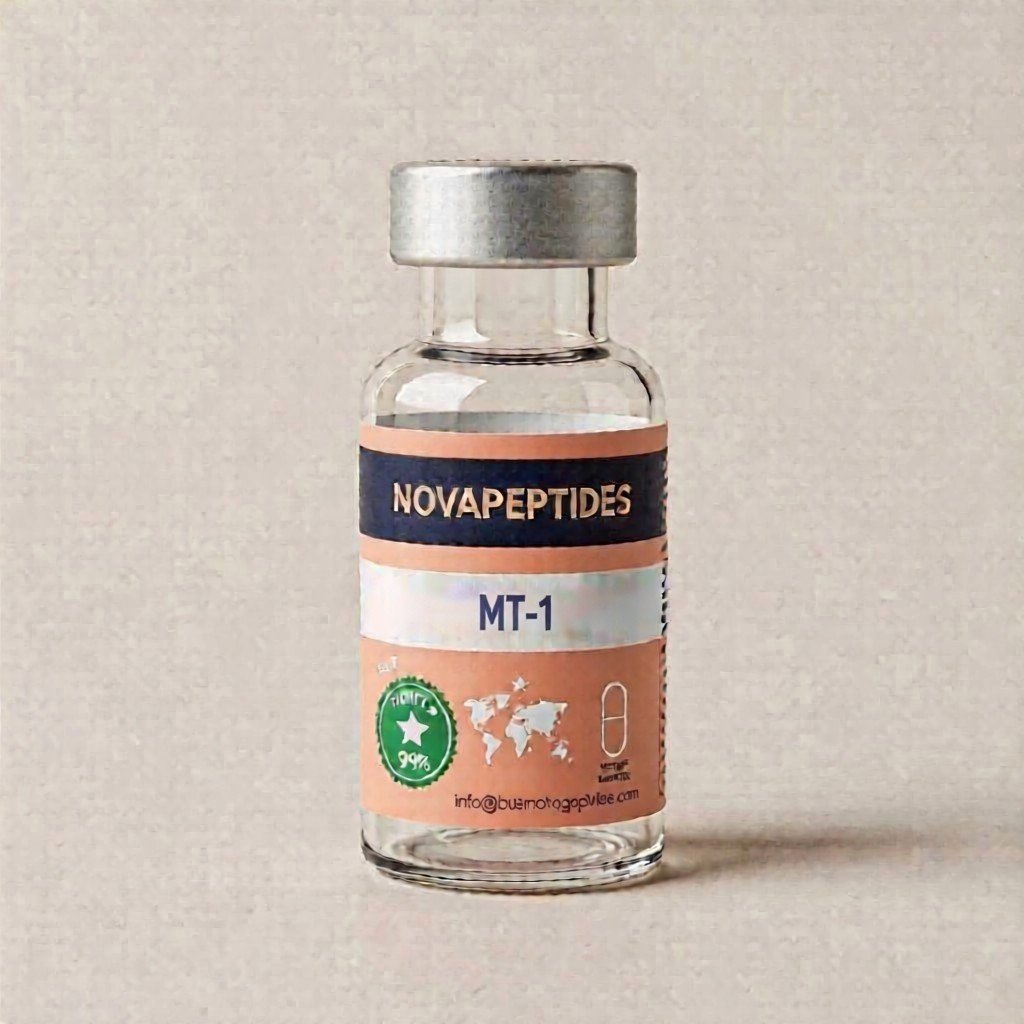
MT-1 (Melanotan I): The MC1R-Selective Melanocortin Peptide
$50.00
MT-1 (Melanotan I, also known as Afamelanotide) is a synthetic 13-amino-acid linear peptide analog of alpha-melanocyte stimulating hormone (α-MSH) that has achieved FDA approval as the pharmaceutical product Scenesse. This highly selective melanocortin 1 receptor (MC1R) agonist stimulates melanogenesis—the production of eumelanin pigment in melanocytes—providing natural photoprotection against ultraviolet radiation. MT-1 was specifically engineered with strategic amino acid substitutions (norleucine at position 4 and D-phenylalanine at position 7) to overcome the extremely short half-life of native α-MSH while maximizing receptor affinity and selectivity. As the first FDA-approved melanocortin peptide for clinical use, MT-1 represents a milestone in photoprotection research and dermatological therapeutics.
MT-1: The Linear Alpha-MSH Analog for Melanocortin Research
MT-1 stands as a landmark achievement in peptide pharmacology as the first melanocortin-based compound to achieve regulatory approval for human therapeutic use. Also known by its pharmaceutical name Afamelanotide and marketed as Scenesse, this 13-amino-acid peptide represents a sophisticated reengineering of the natural hormone alpha-melanocyte stimulating hormone (α-MSH). Through strategic structural modifications, MT-1 achieves what the native hormone cannot: sufficient metabolic stability and receptor selectivity to serve as a practical therapeutic agent for conditions involving photosensitivity and melanocortin dysfunction.
Molecular Structure and Engineering
The architecture of MT-1 reveals the precision of modern peptide medicinal chemistry. The complete amino acid sequence is:
Ac-Ser-Tyr-Ser-Nle-Glu-His-D-Phe-Arg-Trp-Gly-Lys-Pro-Val-NH2
This linear 13-amino-acid structure maintains the core pharmacophore of α-MSH while incorporating two critical modifications that transform its pharmaceutical properties:
- Norleucine (Nle) at Position 4: Replacing methionine removes the oxidation-prone thioether group, dramatically improving metabolic stability and preventing rapid degradation
- D-Phenylalanine (D-Phe) at Position 7: This stereochemical inversion within the conserved His-Phe-Arg-Trp message tetrapeptide removes a favored chymotrypsin-like cleavage site, extending half-life from minutes to approximately 30 minutes while enhancing receptor binding affinity
According to structural analyses documented in peptide research literature, these modifications result in a molecular weight of 1,646.85 Da with markedly prolonged receptor occupancy compared to native α-MSH. The N-terminal acetylation and C-terminal amidation provide additional protection against exopeptidase degradation.
Mechanism of Action: MC1R Selectivity
The pharmacological effects of MT-1 are mediated primarily through selective activation of the melanocortin 1 receptor (MC1R), a G protein-coupled receptor expressed on melanocytes—the pigment-producing cells of the skin. This selectivity distinguishes MT-1 from other melanocortin analogs that bind multiple receptor subtypes.
When MT-1 binds to MC1R, it activates the Gs alpha subunit, stimulating adenylate cyclase and increasing intracellular cAMP levels. This second messenger cascade triggers a series of events culminating in melanogenesis:
- Tyrosinase Upregulation: Enhanced expression and activity of the rate-limiting enzyme in melanin synthesis
- Eumelanin Production: Preferential stimulation of brown-black pigment (eumelanin) over red-yellow pigment (pheomelanin)
- Melanocyte Proliferation: Increased number of pigment-producing cells
- Dendrite Extension: Enhanced transfer of melanin to surrounding keratinocytes
Research published in The Preptide confirms that MT-1 functions as a high-affinity, selective agonist at MC1R with minimal off-target activity at other melanocortin receptors (MC2R, MC3R, MC4R, MC5R). This selectivity profile reduces the risk of side effects associated with non-selective melanocortin activation.
FDA Approval and Clinical Indications
MT-1 achieved a significant milestone in peptide therapeutics when it received FDA approval in 2019 as Scenesse (afamelanotide) 16mg subcutaneous implant for the treatment of erythropoietic protoporphyria (EPP) in adults. This rare genetic disorder causes severe photosensitivity due to accumulation of protoporphyrin IX in erythrocytes, leading to painful phototoxic reactions upon sun exposure.
The approval was based on clinical trials demonstrating that MT-1-induced melanization provided sufficient photoprotection to extend the time EPP patients could spend in sunlight without experiencing painful reactions. By stimulating eumelanin production, the peptide creates a UV-absorbing shield in the skin that filters harmful radiation before it can trigger phototoxic responses.
According to regulatory documentation, MT-1 had previously received EMA approval in 2014, making it one of the few melanocortin peptides to achieve dual regulatory approval. The implant formulation provides sustained release over approximately 2 months, maintaining therapeutic melanin levels with quarterly administration.
Photoprotection and Melanogenesis Research
Beyond its approved indication for EPP, MT-1 has been extensively studied for general photoprotection applications. The peptide’s ability to stimulate natural tanning without UV exposure offers a biological alternative to solar or artificial tanning for research into skin protection mechanisms.
The photoprotective effects of MT-1 operate through multiple mechanisms:
- UV Absorption: Eumelanin pigment absorbs UV-B (280-315 nm) and UV-A (315-400 nm) radiation, preventing DNA damage
- Radical Scavenging: Melanin neutralizes reactive oxygen species generated by UV exposure
- DNA Protection: Reduced formation of cyclobutane pyrimidine dimers and 6-4 photoproducts
- Immunomodulation: Preservation of Langerhans cell function and immune surveillance
Research indicates that MT-1-induced tanning provides a sun protection factor (SPF) equivalent of approximately 3-5, sufficient to significantly reduce UV-induced cellular damage in susceptible populations.
Comparison with Melanotan II (MT-2)
Researchers often compare MT-1 with Melanotan II (MT-2), another synthetic melanocortin analog. While both compounds stimulate melanogenesis, they differ significantly in structure, selectivity, and pharmacological profile:
- Structure: MT-1 is a linear 13-amino-acid peptide; MT-2 is a cyclic 7-amino-acid lactam
- Receptor Selectivity: MT-1 is highly selective for MC1R; MT-2 binds MC1R, MC3R, MC4R, and MC5R with varying affinities
- Side Effect Profile: MT-1‘s MC1R selectivity minimizes effects on appetite, blood pressure, and sexual function seen with non-selective melanocortin agonists
- Duration: MT-1 has a shorter half-life (~30 minutes) requiring more frequent administration compared to MT-2
- Regulatory Status: MT-1 (as Afamelanotide) is FDA-approved; MT-2 has never received regulatory approval for any indication
For research applications requiring selective MC1R activation without off-target effects, MT-1 offers distinct advantages over non-selective alternatives.
Research Applications and Experimental Models
MT-1 serves as a valuable research tool across multiple domains:
- Dermatology Research: Studies of melanocyte biology, pigmentation disorders, and UV protection mechanisms
- Photobiology: Investigation of UV-induced cellular damage and protective responses
- Melanocortin Pharmacology: Structure-activity relationship studies and receptor selectivity profiling
- Porphyria Research: Models of photosensitivity and therapeutic intervention
- Skin Cancer Prevention: Studies on melanin-mediated protection against UV carcinogenesis
The peptide’s well-defined mechanism and established safety profile make it suitable for both in vitro studies of melanocyte function and in vivo models of photoprotection.
For researchers investigating melanocortin peptides, photoprotection, and dermatological therapeutics, explore our comprehensive selection at Buy Nova Peptides Shop or visit Buy Nova Peptides for additional research compounds.
References and Scientific Literature
- Scenesse (Afamelanotide) FDA Approval. (2019). U.S. Food and Drug Administration. FDA.gov
- Scenesse (Afamelanotide) EMA Approval. (2014). European Medicines Agency. EMA.europa.eu
- Langendonk, J.G., et al. (2015). “Afamelanotide for erythropoietic protoporphyria.” New England Journal of Medicine.
- Better Results Book. “Melanotan 1 vs Melanotan 2 2026: Complete Comparison Guide.” Better Results Book
- Peptide Wiki. “Melanotan I Dosage Guide: FDA-Approved MC1R Agonist.” Peptide Wiki
- Superpower. “Melanotan I (Afamelanotide): The Approved MC1R Agonist.” Superpower
- ChemicalBook. “Melanotan-1 | 75921-69-6.” ChemicalBook
- Google Scholar. “Afamelanotide MT-1 melanocortin MC1R photoprotection.” Google Scholar
Disclaimer: This content is provided for educational and research purposes only. MT-1 is approved only for specific medical indications (EPP) under the brand name Scenesse. This information does not constitute medical advice, treatment recommendations, or encouragement of unapproved uses. Always consult qualified healthcare professionals and comply with applicable regulations governing research peptides.
| Dosage | 10mg |
|---|
Be the first to review “MT-1 (Melanotan I): The MC1R-Selective Melanocortin Peptide”
Related products


Uncategorized
HCG (Human Chorionic Gonadotropin): The Glycoprotein Hormone for Reproductive Research


Reviews
There are no reviews yet.