
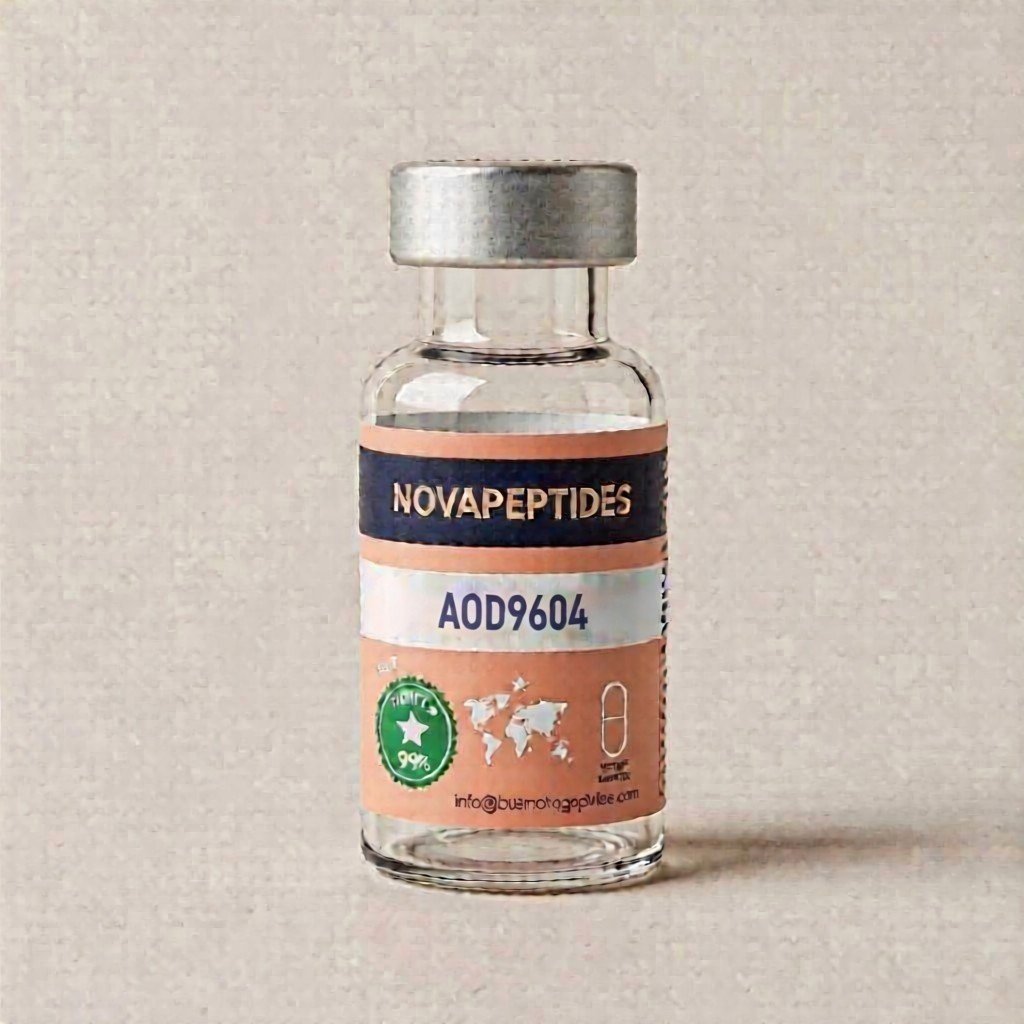
AOD9604: The HGH Fragment 177-191 Lipolytic Peptide

Price range: $114.00 through $200.00
AOD9604 (Anti-Obesity Drug 9604) is a synthetic 16-amino-acid peptide fragment derived from the C-terminal region of human growth hormone (hGH 177-191), developed by Metabolic Pharmaceuticals in Australia during the 1990s. This lipolytic domain peptide was specifically engineered to isolate the fat-burning properties of full-length hGH while eliminating its growth-promoting and diabetogenic effects. AOD9604 stimulates lipolysis (fat breakdown) and inhibits lipogenesis (fat storage) through beta-3 adrenergic receptor activation and receptor-independent mechanisms, without elevating IGF-1 levels or affecting blood glucose homeostasis. Unlike intact growth hormone, AOD9604 does not bind to growth hormone receptors, making it a unique tool for studying adipose tissue metabolism and energy balance.
AOD9604: The Synthetic HGH Fragment for Lipid Metabolism Research
AOD9604 represents a sophisticated approach to peptide drug development—extracting the therapeutic benefits of a complex protein while eliminating unwanted systemic effects. Developed by Metabolic Pharmaceuticals in Australia during the 1990s, this 16-amino-acid fragment of human growth hormone was designed to answer a specific question: Can the fat-burning properties of hGH be isolated from its growth-promoting, diabetogenic, and immunomodulatory activities? After extensive preclinical and clinical investigation, AOD9604 emerged as a unique compound that stimulates lipolysis and fat oxidation through mechanisms distinct from the parent hormone, offering researchers a specialized tool for investigating adipose tissue biology and metabolic regulation.
Molecular Structure and Origin
The complete designation of AOD9604 reveals its precise relationship to human growth hormone: Tyr-hGH177-191. This nomenclature indicates that the peptide consists of amino acids 177 through 191 of the hGH sequence, with an additional N-terminal tyrosine residue added during synthesis to improve stability and detection.
The full amino acid sequence is:
Tyr-Leu-Arg-Ile-Val-Gln-Cys-Arg-Ser-Val-Glu-Gly-Ser-Cys-Gly-Phe
This 16-amino-acid peptide corresponds to the C-terminal lipolytic domain of hGH, the region responsible for the hormone’s fat-metabolizing effects. Research published in PubMed and Wikipedia confirms that this fragment retains the lipid-mobilizing activity of intact hGH while lacking the structural elements required for growth receptor binding and IGF-1 stimulation.
With a molecular weight of approximately 1,817 Da and the chemical formula C78H123N23O23S2, AOD9604 is small enough for efficient tissue penetration while large enough to maintain specific biological activity. The presence of two cysteine residues (positions 8 and 14) allows for potential disulfide bond formation, contributing to structural stability.
Mechanism of Action: Lipolysis and Fat Oxidation
The primary mechanism through which AOD9604 exerts its effects involves stimulation of lipolysis—the breakdown of stored triglycerides into free fatty acids and glycerol—coupled with inhibition of lipogenesis (fat synthesis). Research documented in the Journal of Endocrinology and Metabolism demonstrates that AOD9604 produces these effects through multiple pathways:
Beta-3 Adrenergic Receptor Activation: The predominant mechanism involves upregulation and activation of beta-3 adrenergic receptors (β3-AR) on adipocytes. These receptors, primarily expressed in brown and white adipose tissue, couple to Gs proteins and stimulate adenylate cyclase, increasing cAMP levels and activating hormone-sensitive lipase. Studies in PubMed show that AOD9604-induced fat loss is significantly attenuated in beta-3-AR knockout mice, confirming the importance of this pathway.
Receptor-Independent Mechanisms: Interestingly, AOD9604 retains some lipolytic activity even in animals lacking functional beta-3 receptors, suggesting additional mechanisms of action. Research indicates potential direct effects on adipocyte metabolism, including modulation of lipogenic enzymes and enhancement of mitochondrial fatty acid oxidation.
Energy Expenditure Enhancement: Beyond simple fat mobilization, AOD9604 appears to increase overall energy expenditure and fat oxidation, shifting metabolic balance toward catabolism of lipid stores.
Distinct Properties: What AOD9604 Does NOT Do
Perhaps the most scientifically significant aspect of AOD9604 is its selective activity profile—what it lacks in biological effects is as important as what it possesses. Unlike full-length hGH, AOD9604:
- Does Not Bind GH Receptors: The peptide lacks the structural determinants required for interaction with the growth hormone receptor, eliminating growth-promoting effects
- Does Not Stimulate IGF-1 Production: Research consistently shows no elevation of insulin-like growth factor 1 in any system studied, avoiding concerns about IGF-1-mediated cell proliferation
- Does Not Affect Blood Glucose: Clinical studies demonstrate no induction of insulin resistance or disruption of glucose homeostasis
- Does Not Cause Water Retention: The edema and carpal tunnel syndrome associated with hGH therapy are absent
- Does Not Affect Bone Growth: No stimulation of longitudinal bone growth or closure of epiphyses
This clean separation of lipolytic activity from other hGH effects, as documented in Journal of Endocrinology and Metabolism, positions AOD9604 as a unique research compound for studying isolated fat metabolism.
Preclinical Research and Animal Studies
The development of AOD9604 relied heavily on animal models of obesity and metabolic dysfunction. Early studies using genetically obese Zucker rats demonstrated that daily treatment with oral AOD9604 (500 μg/kg body weight) for 19 days significantly reduced body weight and adipose tissue mass compared to controls.
Key findings from preclinical research include:
- Reduced body weight and body fat in obese mice following 14 days of chronic administration
- Increased lipolytic sensitivity in adipose tissue
- Enhanced fat oxidation without changes in food intake
- Preservation of lean body mass during weight loss
- No evidence of systemic toxicity or adverse metabolic effects
Importantly, studies in beta-3-AR knockout mice revealed that while the beta-adrenergic pathway contributes significantly to AOD9604‘s effects, alternative mechanisms also participate in fat reduction, suggesting a robust and redundant system for lipid mobilization.
Clinical Development and Human Studies
Following promising preclinical results, AOD9604 entered human clinical trials to evaluate safety, tolerability, and efficacy in overweight and obese populations. A Phase I trial documented in the Journal of Endocrinology and Metabolism established that the peptide was well-tolerated with no significant adverse effects.
However, Phase 2b clinical trials did not demonstrate sufficient efficacy for weight loss to support continued development as an anti-obesity drug. While the mechanism of action was confirmed in humans, the magnitude of effect did not meet the thresholds required for pharmaceutical approval. This outcome highlights the complexity of translating preclinical findings to clinical efficacy and the challenges of obesity pharmacotherapy.
Despite the lack of approval for weight management, the safety data and mechanistic insights from clinical studies remain valuable for research applications. The confirmation that AOD9604 does not elevate IGF-1 or affect glucose metabolism in humans validates its selectivity and supports continued investigation in metabolic research.
Comparison with HGH Fragment 176-191
Researchers often compare AOD9604 with HGH Fragment 176-191, a related peptide with similar origins. While both compounds derive from the lipolytic region of hGH, they differ in important ways:
- Sequence: AOD9604 corresponds to hGH 177-191 with an added N-terminal tyrosine; Fragment 176-191 represents a slightly different region
- Development: AOD9604 was developed specifically by Metabolic Pharmaceuticals with pharmaceutical-grade quality standards
- Research History: AOD9604 has undergone more extensive clinical evaluation with published safety data
- Mechanism: Both act through similar beta-adrenergic pathways, though AOD9604 has been more rigorously characterized
For research requiring well-documented mechanisms and safety profiles, AOD9604 offers advantages based on its extensive characterization.
Research Applications and Experimental Models
AOD9604 serves as a valuable research tool across multiple domains:
- Adipose Tissue Biology: Studies of lipolysis, lipogenesis, and adipocyte metabolism
- Beta-Adrenergic Pharmacology: Investigation of beta-3 receptor signaling and selective agonism
- Metabolic Disease Models: Research on obesity, insulin resistance, and metabolic syndrome
- Comparative Endocrinology: Studies distinguishing hGH’s lipolytic effects from its other activities
- Energy Balance Research: Investigation of fat oxidation and energy expenditure mechanisms
The peptide’s selectivity for adipose tissue metabolism without systemic growth hormone effects makes it particularly useful for isolating and studying specific aspects of lipid metabolism.
For researchers investigating metabolic peptides, lipolytic compounds, and growth hormone-related mechanisms, explore our comprehensive selection at Buy Nova Peptides Shop or visit Buy Nova Peptides for additional research compounds and educational resources.
References and Scientific Literature
- Heffernan, M., et al. (2001). “The effects of human GH and its lipolytic fragment (AOD9604) on lipid metabolism following chronic treatment in obese mice and beta(3)-AR knock-out mice.” Endocrinology, 142(12), 5182-5189. PubMed
- Ng, F.M., et al. (2000). “Metabolic studies of a synthetic lipolytic domain (AOD9604) of human growth hormone.” Hormone Research, 53(6), 274-278. PubMed
- Moré, M., et al. (2023). “Safety and Metabolism of AOD9604, a Novel Nutraceutical Ingredient for Improved Metabolic Health.” Journal of Endocrinology and Metabolism. Journal of Endocrinology and Metabolism
- Stier, H., et al. (2020). “Safety and Tolerability of the Hexadecapeptide AOD9604 in Humans.” Journal of Endocrinology and Metabolism. JOFEM
- Wikipedia Contributors. “AOD9604.” Wikipedia. Wikipedia
- Peptide Journal. “Fragment 176-191 vs. AOD-9604: Fat Loss Peptides.” Peptide Journal
- The Peptide List. “AOD-9604: The Weight Loss Peptide That Isn’t a GLP-1.” The Peptide List
- Google Scholar. “AOD9604 HGH fragment lipolysis beta-3 adrenergic.” Google Scholar
Disclaimer: This content is provided for educational and research purposes only. AOD9604 is not approved for human therapeutic use. This information does not constitute medical advice, treatment recommendations, or claims of efficacy for weight loss or any other indication. Always consult qualified healthcare professionals and comply with applicable regulations governing research peptides.
| Dosage | 5mg, 10mg |
|---|
Be the first to review “AOD9604: The HGH Fragment 177-191 Lipolytic Peptide”
Related products

Uncategorized

Uncategorized
HCG (Human Chorionic Gonadotropin): The Glycoprotein Hormone for Reproductive Research
Uncategorized


Uncategorized
Reviews
There are no reviews yet.