

PE 22-28 Peptide – TREK-1 Inhibitor for Neuroscience Research | Buy Nova Peptides

$71.00
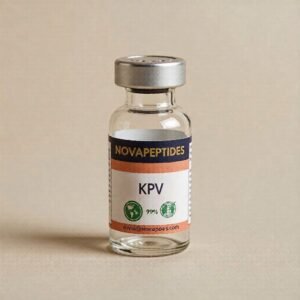
TREK-1 potassium channel inhibitor for neuroscience research. PE 22-28 is a 7-amino-acid heptapeptide derived from spadin that selectively blocks the TREK-1 (K2P2.1) two-pore-domain potassium channel. Studied for effects on neuronal excitability and serotonergic transmission.
- 7-amino-acid heptapeptide (Gly-Val-Ser-Trp-Gly-Leu-Arg)
- Potent TREK-1 potassium channel inhibitor (IC50 ~0.12 nM)
- Derived from sortilin propeptide (residues 22-28)
- Enhanced analog of spadin with improved specificity
- Lyophilized powder for laboratory research only
PE 22-28: The TREK-1 Inhibitor Peptide for Depression and Neuroplasticity Research
PE 22-28 represents a breakthrough in peptide-based neuroscience research—a minimal 7-amino-acid sequence that potently and selectively inhibits the TREK-1 potassium channel with nanomolar affinity. This synthetic heptapeptide was developed as an optimized analog of spadin, an endogenous peptide derived from the sortilin propeptide that showed promise as an antidepressant agent. PE 22-28 improves upon its parent compound with approximately 300-fold greater potency and enhanced specificity, making it a valuable tool for investigating the role of TREK-1 channels in mood regulation, neuronal excitability, and neuroplasticity.
The discovery of PE 22-28 emerged from research into two-pore-domain potassium channels, which regulate neuronal excitability by controlling potassium leak currents. TREK-1 (also designated K2P2.1 or KCNK2) is widely expressed in the brain, including regions critical for mood regulation such as the hippocampus, cortex, and dorsal raphe nucleus. By blocking this channel, PE 22-28 increases neuronal excitability and enhances serotonergic neurotransmission—offering a mechanism distinct from traditional monoamine-based antidepressants.
Molecular Structure and Origin
PE 22-28 is a linear heptapeptide with the amino acid sequence Gly-Val-Ser-Trp-Gly-Leu-Arg. The name indicates its origin: it represents residues 22 through 28 of the propeptide of sortilin (also known as neurotensin receptor 3 or NTSR3), a protein involved in intracellular trafficking. The full 17-amino-acid fragment of this propeptide is called spadin, which was the starting point for developing PE 22-28.
The sequence breakdown reveals:
- Glycine (Gly): Provides flexibility at the N-terminus
- Valine (Val): Hydrophobic residue contributing to binding affinity
- Serine (Ser): Polar residue potentially involved in hydrogen bonding
- Tryptophan (Trp): Large aromatic residue critical for TREK-1 interaction
- Glycine (Gly): Central spacer providing conformational flexibility
- Leucine (Leu): Hydrophobic residue contributing to affinity
- Arginine (Arg): Positively charged C-terminal residue
This compact structure represents the minimal active fragment of spadin, optimized through structure-activity relationship studies to retain full TREK-1 inhibitory activity while improving pharmacokinetic properties.
Mechanism of Action: TREK-1 Inhibition
The therapeutic rationale for PE 22-28 centers on the unique physiology of TREK-1 channels. These two-pore-domain potassium channels function as “leak” channels that allow potassium to flow out of neurons, hyperpolarizing the membrane and making the cell less excitable. By maintaining a negative resting membrane potential, TREK-1 channels act as a brake on neuronal firing.
PE 22-28 binds to and inhibits TREK-1 channels with remarkable potency (IC50 approximately 0.12 nM), blocking this potassium leak. The consequences include:
- Membrane depolarization: Reduced potassium efflux makes the neuronal membrane potential less negative, bringing it closer to the threshold for action potential generation
- Increased excitability: Neurons become more responsive to synaptic inputs and depolarizing stimuli
- Enhanced firing: Serotonergic neurons in the dorsal raphe, which express high levels of TREK-1, show increased spontaneous firing rates
- Improved neurotransmission: Enhanced serotonergic signaling in projection areas including the hippocampus and cortex
This mechanism differs fundamentally from SSRIs and other conventional antidepressants. Rather than blocking serotonin reuptake, PE 22-28 increases the excitability of serotonin-producing neurons themselves, potentially normalizing firing patterns that are suppressed in depression.
The TREK-1 Connection to Depression
The rationale for targeting TREK-1 in depression research emerged from converging lines of evidence. Genetic studies in mice revealed that animals lacking the TREK-1 channel (TREK-1 knockout mice) display behavioral phenotypes consistent with antidepressant treatment, including resistance to depression-like behaviors in stress models.
Pharmacological studies confirmed this genetic evidence: TREK-1 inhibitors produce antidepressant-like effects in animal models. The channel is particularly relevant because it is regulated by multiple neurotransmitter systems implicated in depression, including serotonin receptors. This creates a mechanistic link between monoamine signaling and neuronal excitability that PE 22-28 exploits.
Research published in Frontiers in Pharmacology demonstrated that PE 22-28 not only inhibits TREK-1 more potently than spadin but also shows improved in vivo stability and antidepressant activity in rodent models. The enhanced pharmacokinetic profile allows for more reliable dosing and sustained effects compared to the parent peptide.
Research Applications and Findings
PE 22-28 has been investigated in several preclinical research paradigms relevant to depression and neuroplasticity:
Behavioral Models: In rodent studies, PE 22-28 has shown activity in behavioral tests predictive of antidepressant efficacy, including the forced swim test and tail suspension test. The rapid onset of action distinguishes it from conventional antidepressants that typically require weeks to show behavioral effects.
Neurogenesis: Beyond acute effects on neurotransmission, TREK-1 inhibition may promote neuroplasticity and neurogenesis—processes that are impaired in depression and enhanced by effective antidepressant treatments. The hippocampus, a brain region critical for memory and mood regulation, shows particular sensitivity to TREK-1 modulation.
Serotonergic Function: Direct electrophysiological studies have confirmed that PE 22-28 increases firing rates of serotonergic neurons in the dorsal raphe nucleus, the primary source of brain serotonin. This effect is specific and reversible, consistent with direct TREK-1 inhibition.
Neuroprotection: TREK-1 channels have been implicated in ischemic tolerance and neuroprotection. While the primary research focus has been on depression, the channel’s role in cellular stress responses suggests broader neurological applications.
PE 22-28 vs. Spadin and Other TREK-1 Modulators
Understanding PE 22-28’s position requires comparison with related compounds:
Spadin is the 17-amino-acid parent peptide from which PE 22-28 was derived. While spadin showed promising antidepressant activity, its larger size and susceptibility to proteolysis limited practical utility. PE 22-28 captures the essential pharmacophore in a smaller, more stable package.
Other TREK-1 inhibitors include small molecules like fluoxetine (Prozac), which was subsequently found to have TREK-1 inhibitory activity that may contribute to its antidepressant effects. However, these agents lack the selectivity of PE 22-28 and affect multiple targets.
Antidepressants like SSRIs work through completely different mechanisms—blocking serotonin reuptake rather than modulating neuronal excitability. The TREK-1 approach offers a novel pathway that may complement or provide alternatives to monoamine-based therapies.
Pharmacokinetic Advantages
The truncation of spadin to PE 22-28 provides significant pharmacokinetic benefits beyond potency. The 7-amino-acid structure is small enough to potentially cross the blood-brain barrier while retaining sufficient complexity for high-affinity target binding. Research indicates improved in vivo stability compared to larger peptide precursors, likely due to reduced susceptibility to proteolytic degradation.
The tryptophan residue at position 4 appears particularly important for both binding affinity and membrane permeability. Structure-activity relationship studies have shown that modifications to this residue or the surrounding sequence can dramatically affect TREK-1 potency, guiding the development of optimized analogs.
Research Protocol Considerations
Laboratories working with PE 22-28 should appreciate its unique mechanism and appropriate research applications. Standard reconstitution uses bacteriostatic water or sterile saline, with storage of lyophilized powder under refrigeration and protection from light.
Research endpoints typically include:
- Electrophysiology: Patch-clamp recordings to confirm TREK-1 inhibition and effects on neuronal excitability
- Behavioral assays: Standard tests for antidepressant-like activity in rodent models
- Neurochemistry: Measurement of serotonin and metabolite levels in brain regions
- Neuroplasticity markers: Assessment of neurogenesis, synaptic proteins, and dendritic complexity
The rapid onset of action observed in preclinical studies suggests that acute dosing paradigms may be appropriate for some research questions, unlike conventional antidepressants that require chronic administration.
As with all research peptides, PE 22-28 is intended strictly for laboratory investigation and is not approved for human use.
Current Research Status and Future Directions
PE 22-28 remains in the preclinical research stage, with all evidence derived from cellular and animal studies. No human clinical trials have been completed as of 2026, meaning translation to therapeutic applications remains distant. However, the compelling preclinical data and novel mechanism continue to generate research interest.
Current research directions include:
- Structural studies: Elucidating the precise binding mode of PE 22-28 to TREK-1 channels
- Analog development: Creating modified versions with improved stability, selectivity, or brain penetration
- Combination studies: Exploring interactions with conventional antidepressants and other neuromodulatory agents
- Expanded indications: Investigating potential applications in anxiety, pain, and neurodegenerative conditions
The TREK-1 channel represents an attractive target for drug development because it offers a mechanism distinct from existing antidepressants, potentially addressing treatment-resistant depression.
Explore our complete selection of research peptides and neuroscience compounds for your laboratory studies. Visit our homepage to discover the latest additions to our research catalog.
References
- Mazella J, et al. “Shortened Spadin Analogs Display Better TREK-1 Inhibition, In Vivo Stability and Antidepressant Activity.” Frontiers in Pharmacology. 2017;8:643. https://www.frontiersin.org/journals/pharmacology/articles/10.3389/fphar.2017.00643/full
- “Shortened Spadin Analogs Display Better TREK-1 Inhibition, In Vivo Stability and Antidepressant Activity.” PubMed. https://pubmed.ncbi.nlm.nih.gov/28955242/
- “Spadin-analog specificity.” ResearchGate. https://www.researchgate.net/figure/Spadin-analog-specificity
- “PE 22-28 (acetate).” Cayman Chemical. https://www.caymanchem.com/product/39986/pe-22-28-acetate
- “TREK-1 channel.” Wikipedia. https://en.wikipedia.org/wiki/KCNK2
Disclaimer: This product is sold for laboratory research purposes only. PE 22-28 is not intended for human consumption, medical treatment, or diagnostic use. It is an investigational compound with no approved therapeutic applications. This information is provided for educational purposes and does not constitute medical or scientific advice. Always consult relevant scientific literature and follow proper laboratory safety protocols.
| Dosage | 10mg |
|---|
Be the first to review “PE 22-28 Peptide – TREK-1 Inhibitor for Neuroscience Research | Buy Nova Peptides”
Related products
Uncategorized


Uncategorized

Uncategorized
Reviews
There are no reviews yet.